What Is the Difference Between LMS and LXP? A Complete Comparison Guide
Updated: June 9, 2026
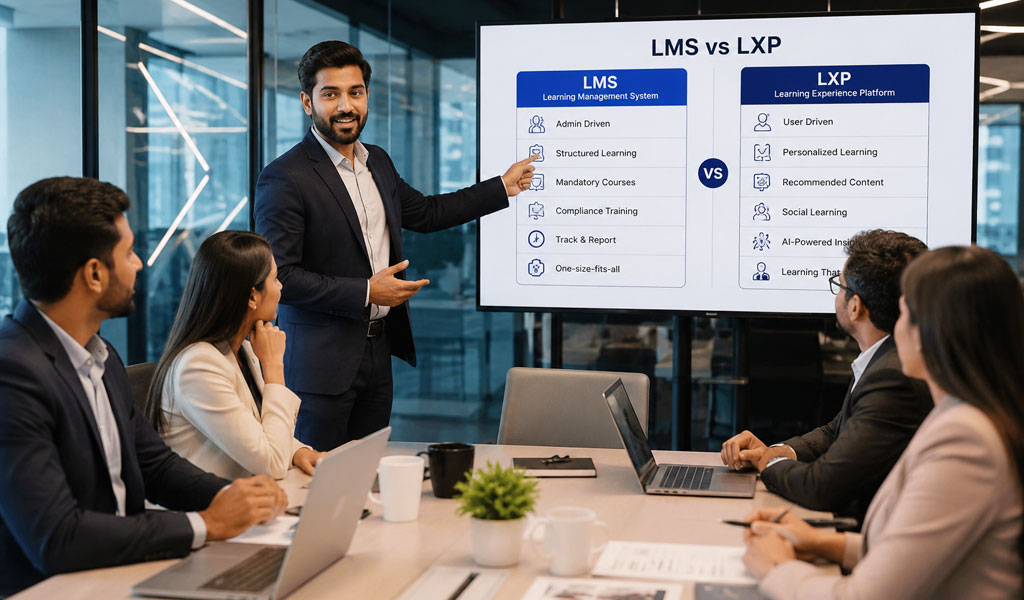 The fundamental difference between learning management system (LMS) and learning experience platform (LXP) is control: LMS is administrator-led and structured, while LXP is learner-driven and personalized—like comparing a traditional classroom to Netflix's personalized content recommendations.
Core Definitions: Understanding Each Platform
What Is a Learning Management System (LMS)?
An LMS is software that allows organizations to create, deliver, manage, and track employee training programs including e-learning, microlearning, and compliance training.
Key characteristics:
- Administrator controls all content
- Structured, mandatory learning paths
- Focus on tracking and compliance
- Closed system—only admins add courses
What Is a Learning Experience Platform (LXP)?
An LXP is a learner-centric platform that provides personalized, self-directed learning experiences through AI-powered content recommendations, similar to how Netflix suggests shows.
Key characteristics:
- Learners control their learning
- Self-directed, personalized paths
- Focus on engagement and skill development
- Open system—anyone can publish content
The 7 Critical Differences Between LMS and LXP
Difference 1: Learning Approach
| Aspect |
LMS |
LXP |
| Control |
Administrator-led |
Learner-driven |
| Structure |
Fixed learning paths |
Self-directed exploration |
| Mandatory |
Yes, required training |
Optional, self-paced |
| Direction |
Top-down approach |
Bottom-up engagement |
LMS delivers formal learning with specific outcomes; LXP creates engaging environments for continuous skill development.
Difference 2: Content Management
| Feature |
LMS |
LXP |
| Content source |
Admins only |
Anyone can publish |
| Content type |
Structured courses |
Diverse formats |
| Updates |
Manual admin updates |
Dynamic, real-time |
| System type |
Closed system |
Open system |
In LMS, Management and L&D determine what content is delivered and how; in LXP, learners take control and responsibility of their own learning.
Difference 3: Personalization Capabilities
| Capability |
LMS |
LXP |
| Personalization |
Basic recommendations |
Advanced AI-powered |
| Content routing |
Static paths |
Dynamic adaptation |
| Learning style |
One-size-fits-all |
Individual preferences |
| AI integration |
Limited |
Core feature |
LXP uses AI to aggregate learning content from various sources and recommend materials based on the learner's interests, role, and activity.
Difference 4: Primary Use Cases
| Best For |
LMS |
LXP |
| Compliance |
Excellent |
Limited |
| Onboarding |
Structured |
Optional |
| Formal training |
Required |
Self-directed |
| Continuous learning |
Limited |
Excellent |
| Skill development |
Basic |
Advanced |
| Social learning |
Minimal |
Core feature |
LMS excels at formal learning with specific outcomes; LXP excels at continuous learning and skill development.
Difference 5: User Experience
| Element |
LMS |
LXP |
| Focus |
Administration of learning |
Experience of learning |
| Interface |
Functional |
Consumer-focused |
| Engagement |
Moderate |
High |
| Autonomy |
High administrative control |
High learner autonomy |
The primary distinction is that LMS is concerned with the administration of learning rather than the experience, whereas LXP facilitates personalized learning.
Difference 6: Social and Collaborative Learning
| Feature |
LMS |
LXP |
| Collaboration |
Limited |
Encouraged |
| Social learning |
Minimal |
Core feature |
| Community building |
Basic |
Advanced |
| Content sharing |
Admin-controlled |
User-generated |
LXP attempts to create a community of like-minded users with collaboration and social learning encouraged.
Difference 7: Analytics and Tracking
| Metric Type |
LMS |
LXP |
| Tracking focus |
Completion rates |
Engagement patterns |
| Reporting |
Mandatory compliance |
Personal insights |
| AI analytics |
Basic |
Predictive |
| Skill measurement |
Course completion |
Competency-based |
LMS tracks highly structured training content; LXP analyzes personalized content engagement.
Feature Comparison Matrix
Complete Feature Breakdown
| Feature Category |
LMS Strength |
LXP Strength |
| Compliance training |
Excellent |
Limited |
| Onboarding |
Strong |
Moderate |
| Personalization |
Basic |
Advanced |
| Social learning |
Minimal |
Excellent |
| Content variety |
Structured |
Diverse |
| AI-powered learning |
Limited |
Core |
| Mobile learning |
Good |
Excellent |
| Skill assessment |
Course-based |
Competency |
| User engagement |
Moderate |
High |
| Admin control |
Maximum |
Minimal |
When to Use Each: Strategic Decision Guide
Choose LMS When...
- You need compliance training with mandatory certification
- Employee onboarding requires structured, standardized paths
- Formal training with specific, measurable outcomes
- Regulatory requirements demand tracking and documentation
- High administrative control is necessary
- Training is mandatory for all employees
Best for: Healthcare, financial services, manufacturing, regulated industries
Choose LXP When...
- Continuous learning and skill development are priorities
- You want to encourage self-directed learning
- Social learning and collaboration matter
- Personalization drives engagement
- Employee autonomy is valued
- Technology or creative industry culture
Best for: Tech companies, creative industries, startups, professional services
Choose Both (Hybrid Approach) When...
- You need compliance + continuous learning
- Formal training + skill development
- Administrator control + learner autonomy
- AI-powered learning platform integration desired
Modern trend: Most organizations in 2026 combine both with AI integration.
The Evolution: How LMS and LXP Are Converging
Traditional Boundaries Are Blurring
| Trend |
Impact |
| LMS adding LXP features |
Personalization improving |
| LXP adding compliance tools |
Better for regulated industries |
| AI integration in both |
Enhanced capabilities |
| Learning platform convergence |
Unified ecosystems |
Modern learning and development platforms now combine LMS structure with LXP engagement.
The Future: Unified Learning Ecosystems
The best learning management system in 2026 incorporates learning experience platform features while maintaining compliance strength.
Key convergence points:
- AI-powered learning platform technology in both
- Mobile optimization across platforms
- Social learning added to LMS
- Compliance tracking added to LXP
Real-World Scenarios: Which Platform Fits?
Scenario 1: Healthcare Organization
- Requirements: Mandatory compliance training, patient safety protocols, certification tracking
- Best choice: LMS (with some LXP for continuous learning)
- Why: Regulatory requirements demand administrator control and tracking
Scenario 2: Technology Company
- Requirements: Continuous skill development, rapid technology updates, collaborative learning
- Best choice: LXP (with LMS for basic onboarding)
- Why: Culture values autonomy, personalization, and social learning
Scenario 3: Financial Services
- Requirements: Regulatory compliance, risk management training, mandatory certifications
- Best choice:LMS (primary) + LXP (secondary)
- Why:Compliance is critical, but continuous learning matters
Scenario 4: Retail Chain
- Requirements: Employee onboarding, product knowledge, customer service training
- Best choice:Hybrid approach
- Why:Needs structured onboarding (LMS) + continuous product learning (LXP)
Scenario 5: Sales Team
Requirements: Product training, sales enablement, performance coaching
Best choice: LXP with sales enablement platform integration
Why: Personalization and AI sales coaching drive sales performance
LMS LXP Cost and Implementation Comparison
Implementation Considerations
| Factor |
LMS |
LXP |
| Setup complexity |
Moderate |
Lower |
| Content development |
High (admin-created) |
Low (user-generated) |
| Training required |
Admin-focused |
User-focused |
| Maintenance |
Admin-heavy |
User-driven |
| Scalability |
Good |
Excellent |
LMS requires more content development from admins; LXP leverages user-generated content.
Key Takeaways
Remember These Critical Points
- Control differs fundamentally: LMS = administrator-led, LXP = learner-driven
- Use cases overlap but differ: LMS for compliance/onboarding, LXP for continuous learning/skill development
- Personalization gap: LXP uses advanced AI-powered learning platform technology; LMS offers basic recommendations
- Content management: LMS = closed system (admins only), LXP = open system (anyone publishes)
- Social learning: LXP encourages collaboration; LMS has minimal social features
- Modern trend: Most organizations combine both with AI integration for comprehensive learning and development platforms
- The best choice: The best learning management system in 2026 balances LMS compliance strength with LXP personalization and engagement
Ready to Choose Your Platform?
Understanding the difference between learning management system and learning experience platform is critical for selecting the right learning platform for your organization.
Your decision should consider:
- Primary training needs (compliance vs. continuous learning)
- Organizational culture (controlled vs. autonomous)
- Required features (tracking vs. personalization)
- Budget for content development
- Future scalability needs
In 2026, the most effective approach combines LMS structure with LXP engagement, powered by AI-powered learning platform technology to create unified learning and development platforms. Now that you are clear with the difference between LMS and LXP, contact us for further guidance and to discuss your requirements with us.