From Skill Gaps to Skill Intelligence: How AI Is Changing Workforce Development
Updated: September 7, 2026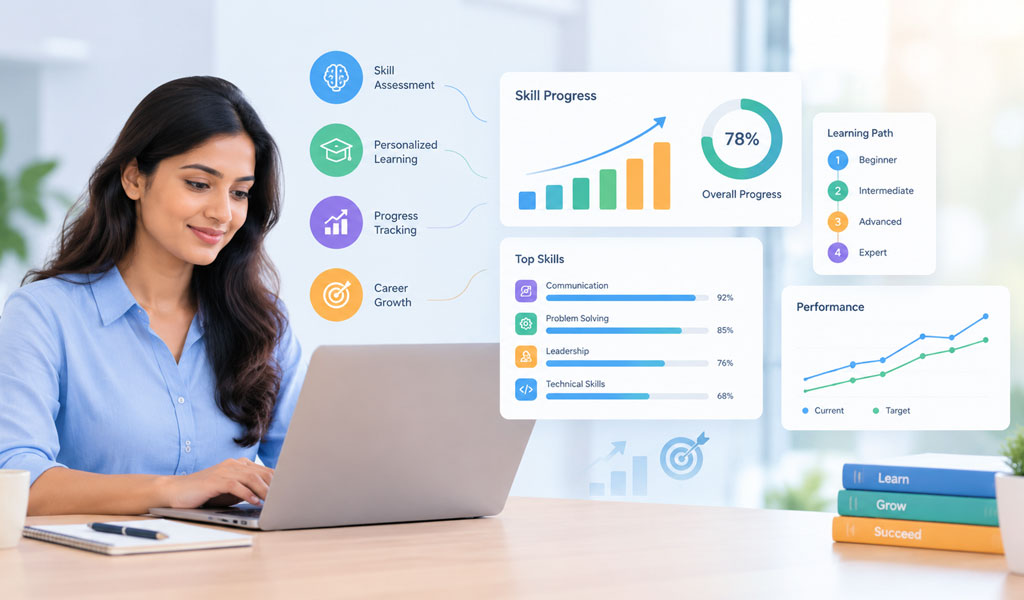
The Workforce Is Changing
Why Skill Management Needs to Evolve
The workplace is changing faster than ever. New technologies, evolving job roles, and shifting business priorities are creating new skill requirements across industries.
For organizations, understanding workforce capabilities is no longer just about identifying what employees are missing. It is about having a clear view of the skills available today and the capabilities needed for tomorrow.
Traditional skill assessments often provide a snapshot of employee capabilities. But skills continuously evolve as people learn, roles change, and new technologies emerge.
This is where Artificial Intelligence is transforming workforce development, helping organizations move from simply identifying skill gaps to building continuous skill intelligence.
What Is Skill Intelligence?
Skill intelligence provides a more complete understanding of an organization’s workforce by connecting skills, roles, learning, performance, and business requirements.
AI can help organizations analyze these elements continuously; giving HR and L&D teams better visibility into workforce capabilities and development needs.
From Skill Gaps to Skill Intelligence
A More Dynamic Approach to Workforce Development
Traditional skill-gap analysis focuses primarily on identifying missing capabilities.
Skill intelligence takes a broader approach by helping organizations understand:
- Existing employee skills and proficiency levels
- Current and emerging skill requirements
- Critical capability gaps across teams
- Learning and development priorities
- Potential opportunities for upskilling and reskilling
- Skills that can support future roles and business needs
Skills Are No Longer Static
An employee’s capabilities can change significantly over time. New learning, projects, technologies, and responsibilities continuously shape the workforce.
AI-powered skill intelligence can bring these changes together, helping organizations maintain a more current understanding of their people and capabilities.
This transforms workforce development from a periodic activity into a continuous process.
How AI Is Transforming Workforce Development
Intelligent Skill Mapping
AI can map employee skills against roles, proficiency levels, and organizational requirements, helping teams identify capability strengths and gaps more effectively.
Smarter Training Needs Analysis
AI can analyze workforce data to identify development priorities at the individual, team, and organizational levels.
This allows organizations to focus learning where it can have the greatest impact.
Personalized Learning
Employees have different experiences, strengths, and development needs.
AI can use individual skill profiles and learning data to recommend relevant courses, skills, and development paths, making learning more targeted and meaningful.
Upskilling and Reskilling
Skill intelligence can help organizations identify existing talent with transferable capabilities and create development paths for emerging roles.
This supports a stronger culture of continuous learning, internal mobility, and career growth.
Better Workforce Decisions
By connecting skills, learning, performance, and business priorities, AI can provide leaders with insights that support more informed workforce planning and development decisions.
Building a Future-Ready Workforce
Making Workforce Development More Intelligent
AI is not replacing the human side of learning. It is helping organizations make better decisions about how people learn and grow.
With continuous skill intelligence, organizations can better understand their workforce, identify emerging capability needs, and create development strategies that align with business goals.
The New Workforce Development Cycle
Discover → Analyze → Develop → Apply → Measure → Adapt
This continuous cycle enables organizations to identify skills, develop capabilities, measure progress, and adapt as workforce needs evolve.
It is on developing the right skills at the right time to create meaningful business impact.
Key Takeaways
- Skill gaps provide a snapshot of current workforce needs.
- Skill intelligence creates a continuous view of workforce capabilities.
- AI can help identify, develop, and anticipate critical skills.
- Personalized learning makes employee development more relevant.
- Connecting skills and business priorities makes workforce development more strategic.