Building a Skilled Workforce with HRMS + LMS Integration
Updated: March 27, 2026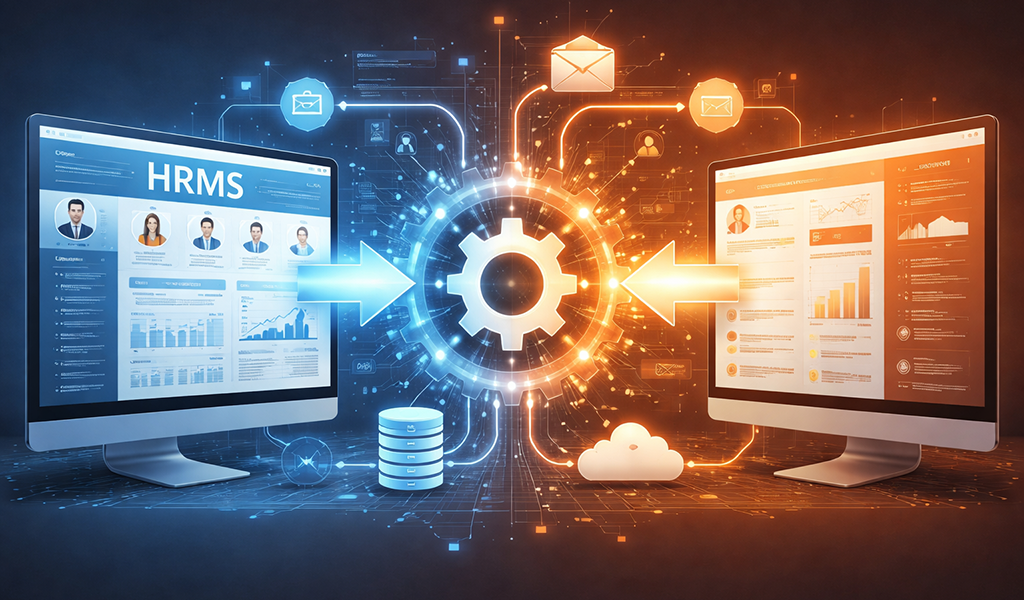
Building a Skilled Workforce with HRMS + LMS Integration
In today’s fast-evolving business environment, organizations are investing heavily in both HRMS (Human Resource Management Systems) and learning platforms. Yet, despite having the right tools, many still struggle with a fundamental challenge:
👉 Employees are trained, but not truly job-ready.
The root cause?
Disconnected systems.
The Problem with Siloed Systems
An HRMS manages critical employee data – roles, experience, performance, and career progression.
A learning platform tracks courses, assessments, and completion rates.
But when these systems operate independently:
- Learning is not aligned with real job requirements
- Skill gaps remain hidden
- Training becomes generic and reactive
This leads to slower onboarding, inconsistent performance, and missed business opportunities.
Why Integration Matters
Integrating HRMS with your learning platform is not just a technical upgrade – it’s a strategic transformation.
When these systems are seamlessly connected:
- Employee data flows automatically into learning workflows
- Role-based skill requirements are dynamically mapped
- Learning becomes personalized and contextual
This creates a unified view of:
- Who your employees are
- What they know
- What they still need to perform better
Moving Beyond Data Sync to Capability Building
Basic integrations typically focus on:
- User provisioning
- Course assignments
- Completion tracking
While necessary, these are only the starting point.
Modern organizations need to go further – toward capability-driven systems, where integration enables:
- Continuous skill gap identification
- Real-time learning interventions
- Ongoing performance tracking
This ensures learning is not just delivered – but applied.
The Role of Agentic AI in Integrated Systems
The next evolution of HRMS + LMS integration is powered by Agentic AI – systems that don’t just generate insights but take action automatically.
A Simple Agentic AI Flow
1. Trigger (HRMS Signal)
An employee is onboarded or promoted into a new role
2. Diagnosis (Skill Intelligence Layer)
The system identifies gaps in required skills
3. Action (AI-Driven Intervention)
- Personalized learning paths are assigned
- Role-play simulations are initiated
- Managers receive nudges for coaching
4. Feedback Loop (Performance Update)
Progress is tracked and skill profiles are updated in real time
This creates a closed-loop system where learning continuously evolves with employee needs.
Business Impact of a Unified System
When HRMS and LMS work together intelligently, organizations unlock measurable outcomes:
🚀 Faster Time to Productivity
New hires become effective contributors much sooner
📉 Reduced Skill Gaps
Employees receive targeted interventions instead of generic training
💰 Improved Business Performance
- Higher sales conversions
- Better customer interactions
- Fewer escalations
🧠 Data-Driven Workforce Decisions
Leaders gain clarity on employee readiness and potential
From Systems of Record to Systems of Action
Traditionally:
- HRMS has been a system of record
- LMS has been a system of learning
The future lies in building a system of action, where:
- Data flows seamlessly
- Insights are generated continuously
- Actions are triggered automatically
This is where true workforce transformation happens.
Conclusion
Building a skilled workforce is no longer about increasing training hours.
It’s about delivering the right learning, at the right time, for the right individual.
A well-integrated HRMS and learning platform – enhanced with Agentic AI – enables organizations to move beyond training and focus on what truly matters:
👉 Workforce performance.
Check out our HRMS Partner OpportuneHR