Role-Based Learning Explained: Why Personalized Workforce Training Matters
Updated: June 6, 2026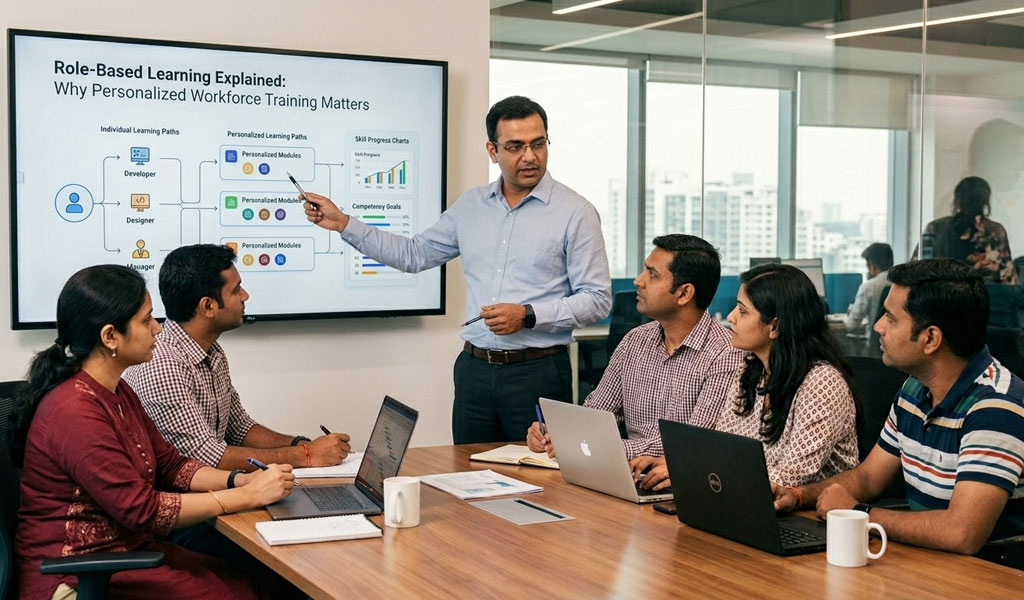
Modern workplaces are becoming increasingly dynamic, digital, and skill-driven. Organizations today employ people across multiple departments, job functions, locations, and experience levels. A single company may have:
Employees spend time consuming irrelevant training while organizations struggle with low engagement, poor learning effectiveness, and limited workforce productivity. This is where Role-Based Learning becomes critical. Role-based learning helps organizations personalize employee training based on job roles, skill requirements, and business objectives. It ensures employees receive the right learning at the right time based on what they actually need to perform effectively. In this blog, we’ll explore:
- Sales teams
- Retail staff
- Customer support agents
- Managers
- Engineers
- Compliance officers
- Frontline workers
- Leadership teams
Employees spend time consuming irrelevant training while organizations struggle with low engagement, poor learning effectiveness, and limited workforce productivity. This is where Role-Based Learning becomes critical. Role-based learning helps organizations personalize employee training based on job roles, skill requirements, and business objectives. It ensures employees receive the right learning at the right time based on what they actually need to perform effectively. In this blog, we’ll explore:
- What role-based learning is
- Why traditional training approaches fail
- Benefits of role-based learning
- How AI improves role-based learning
- Industry use cases
- The future of personalized workforce learning
What is Role-Based Learning?
Role-based learning is a personalized training approach where employees receive learning content specifically aligned with their:- Job role
- Responsibilities
- Skill requirements
- Department
- Experience level
- Career goals
- Sales teams receive product knowledge and objection-handling training
- Managers receive leadership and people management training
- Customer support teams receive communication and issue resolution training
- Compliance teams receive regulatory learning
- Frontline employees receive operational and process training
- More relevant
- More engaging
- More effective
- More business-focused
Why Traditional Training Approaches Fail
Many organizations still rely on generic learning programs. Traditional training methods often:- Deliver the same courses to everyone
- Ignore employee skill levels
- Lack personalization
- Focus only on compliance
- Create low engagement
1. Information Overload
Employees often receive large volumes of irrelevant content that does not apply to their role. This causes:- Learning fatigue
- Reduced attention
- Lower knowledge retention
2. Low Learner Engagement
Employees engage more when learning feels useful and relevant. Generic training programs often feel:- Mandatory
- Repetitive
- Unrelated to daily work
3. Poor Training ROI
Organizations waste training budgets on content that does not directly improve employee performance. Without personalization, learning effectiveness decreases.4. Slower Employee Development
Employees take longer to build critical job skills when learning paths are not aligned with role requirements.5. Difficulty Measuring Skill Readiness
Traditional learning systems struggle to map:- Job roles
- Skill frameworks
- Competency development
Why Role-Based Learning Matters
Role-based learning solves these challenges by aligning training directly with workforce responsibilities. Organizations implementing role-based learning gain major benefits.1. Personalized Learning Experiences
Employees receive training relevant to:- Their role
- Daily tasks
- Business responsibilities
2. Higher Employee Engagement
When employees see direct value in training, they are more likely to:- Complete courses
- Participate actively
- Retain knowledge
3. Faster Onboarding
Role-specific onboarding helps new employees become productive faster. Instead of overwhelming new hires with generic information, organizations can deliver:- Targeted onboarding journeys
- Department-specific training
- Skill-focused learning paths
4. Improved Workforce Productivity
Employees build the exact skills required for their job. This improves:- Efficiency
- Confidence
- Performance
- Customer interactions
5. Better Skill Development
Role-based learning helps organizations build structured competency frameworks. Employees can continuously develop skills aligned with:- Career progression
- Organizational goals
- Future business needs
6. More Effective Compliance Training
Different roles require different compliance knowledge. Role-based learning ensures employees receive:- Relevant compliance training
- Department-specific certifications
- Industry-specific regulatory education
Examples of Role-Based Learning
Role-based learning can be applied across virtually every department.Sales Teams
Sales learning paths may include:- Product training
- Sales pitches
- Negotiation skills
- Objection handling
- CRM usage
- Competitive readiness
Customer Support Teams
Training may focus on:- Communication skills
- Customer handling
- Conflict resolution
- Product troubleshooting
- Service quality
Managers & Leaders
Leadership learning paths may include:- People management
- Decision-making
- Coaching skills
- Strategic thinking
- Team productivity
Retail Workforce
Retail staff may require:- Product knowledge
- Store operations
- Customer engagement
- POS systems training
- Upselling techniques
Manufacturing Employees
Manufacturing learning paths may include:- Safety training
- SOP compliance
- Equipment handling
- Quality management
- Technical skills
Frontline Workforce
Frontline employees often need:- Mobile-first learning
- Microlearning
- Operational guidance
- Process training
How AI Improves Role-Based Learning
Artificial Intelligence is transforming role-based learning significantly. Modern AI-powered learning platforms can:- Automatically map employee roles
- Analyze skill gaps
- Recommend personalized content
- Build adaptive learning paths
- Track workforce competencies
AI-Powered Learning Recommendations
AI systems analyze:- Employee behavior
- Skill levels
- Assessments
- Learning history
- Performance metrics
- Personalized courses
- Skill-building recommendations
- Career-focused learning journeys
Intelligent Skill Mapping
AI platforms can map:- Job roles
- Competencies
- Skill frameworks
- Organizational goals
Continuous Learning Optimization
AI continuously tracks:- Learning progress
- Skill development
- Employee engagement
- Training effectiveness
Conversational Learning Experiences
Modern role-based learning platforms increasingly use:- Chat-based learning
- Voice-based learning
- Conversational AI
Role-Based Learning & Skill Intelligence
Organizations today are shifting from job-based workforce management toward skill-based workforce strategies. Role-based learning supports this transformation by helping organizations:- Identify workforce capabilities
- Build future-ready skills
- Improve internal mobility
- Enable career growth
- Support succession planning
- Skill gaps
- Competency development
- Workforce readiness
Industries Using Role-Based Learning
Role-based learning is widely adopted across:- Retail
- BFSI
- Manufacturing
- Healthcare
- IT & Software
- Logistics
- Telecom
- Consulting
- Employee onboarding
- Sales enablement
- Leadership development
- Compliance training
- Technical upskilling
- Customer service training
Why Mobile Learning Matters for Role-Based Training
Many modern employees work remotely or in the field. Role-based learning platforms must support:- Mobile learning
- Microlearning
- Offline learning
- Anytime-anywhere access
- Retail staff
- Sales teams
- Frontline workforce
- Distributed employees
The Future of Role-Based Learning
The future of workforce learning is becoming:- Personalized
- AI-powered
- Skill-driven
- Conversational
- Continuous
- AI recommendations
- Skill intelligence
- Predictive workforce analytics
- Conversational learning
- Adaptive learning journeys
How Edurigo Supports Role-Based Learning
Edurigo helps organizations implement intelligent role-based workforce learning through:- AI-powered learning recommendations
- Skill intelligence dashboards
- Personalized learning journeys
- Mobile-first learning
- Microlearning
- Conversational learning
- Sales enablement
- Workforce analytics
- AI role-play simulations
- Job roles
- Skill frameworks
- Business objectives
- Workforce development strategies
Final Thoughts
Role-based learning is no longer optional for modern organizations. Employees expect learning experiences that are:- Relevant
- Personalized
- Flexible
- Role-specific
- Higher learner engagement
- Faster onboarding
- Improved workforce productivity
- Better skill development
- Stronger business alignment