LMS vs LXP - What’s the Difference?
Updated: June 3, 2026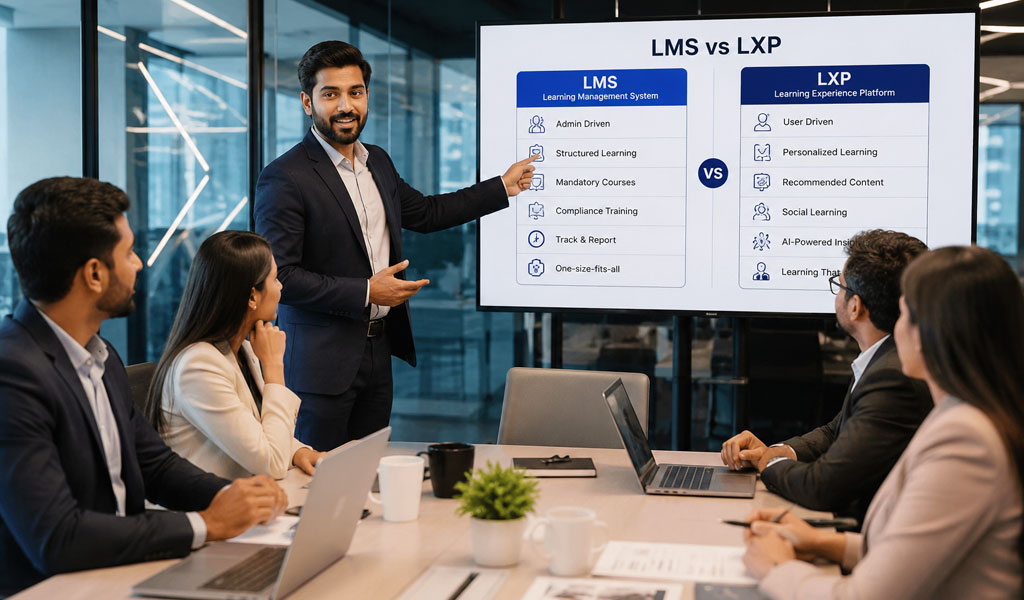
LMS vs LXP - What’s the Difference?
The corporate learning landscape has changed dramatically over the last few years. Traditional Learning Management Systems (LMS) are no longer the only option for organizations looking to train employees, onboard teams, manage compliance, and develop workforce skills. Today, businesses are increasingly exploring Learning Experience Platforms (LXP) - modern, AI-powered learning systems designed to improve employee engagement, personalization, and continuous learning. But what exactly is the difference between an LMS and an LXP? And more importantly, which one should your organization choose? In this guide, we’ll break down:- What an LMS is
- What an LXP is
- Key differences between LMS and LXP
- Benefits of each approach
- Why AI-powered LXPs are growing rapidly
- How modern enterprises are transforming workforce learning
What is an LMS?
An LMS (Learning Management System) is a software platform designed to manage, deliver, track, and administer employee training programs. Traditional LMS platforms were originally built to help organizations:- Upload training courses
- Assign learning modules
- Track course completion
- Conduct compliance training
- Generate training reports
- Compliance training
- Employee onboarding
- Certification programs
- Mandatory training
- Corporate learning management
- Moodle
- TalentLMS
- Docebo
- Absorb LMS
What is an LXP?
An LXP (Learning Experience Platform) is a modern learning platform designed to deliver personalized, engaging, and learner-centric experiences. Unlike traditional LMS platforms, LXPs focus heavily on:- Personalized learning
- AI-powered recommendations
- Skill development
- Continuous learning
- Employee engagement
- Social and collaborative learning
- Mobile-first learning
- Conversational learning experiences
- Artificial Intelligence
- Conversational learning
- Skill intelligence
- Microlearning
- Sales enablement
- Mobile learning
- Workforce analytics
LMS vs LXP: Key Differences
1. Learning Approach
LMS Traditional LMS platforms are administrator-driven. Learning is assigned top-down by HR or L&D teams. LXP LXPs are learner-driven. Employees receive personalized recommendations and can explore learning content based on their interests, skills, and career goals.2. Personalization
LMS Most traditional LMS systems offer limited personalization. LXP LXPs use AI to personalize:- Learning paths
- Recommendations
- Content delivery
- Skill development journeys
3. User Experience
LMSTraditional LMS interfaces are often course-centric and compliance-focused. LXP
LXPs prioritize modern user experiences similar to:
- Netflix
- Spotify
- YouTube
- Social media platforms
4. AI & Intelligence
LMS Traditional LMS platforms typically offer limited AI capabilities. LXP Modern LXPs use AI for:- Learning recommendations
- Skill gap analysis
- Conversational learning
- Training Needs Identification (TNI)
- Workforce analytics
- Adaptive learning journeys
5. Mobile Learning
LMS Many older LMS platforms were desktop-first systems. LXP Modern LXPs are mobile-first learning platforms designed for distributed and frontline workforces. Employees can learn:- Anytime
- Anywhere
- Across devices
- Retail staff
- Field sales teams
- Manufacturing workforce
- Distributed enterprise teams
6. Learning Content
LMS Traditional LMS platforms usually focus on formal courses. LXP LXPs support:- Microlearning
- Videos
- Podcasts
- Conversational learning
- Social learning
- AI-generated content
- User-generated content
7. Employee Engagement
LMS Engagement in traditional LMS platforms is often low because learning feels mandatory and static. LXP LXPs improve engagement through:- Gamification
- AI recommendations
- Conversational learning
- Personalized experiences
- Continuous learning
- Higher completion rates
- Better knowledge retention
- Increased learning adoption
8. Skill Development
LMS Traditional LMS systems mainly track course completions. LXP LXPs focus heavily on:- Workforce skills
- Competency development
- Skill intelligence
- Career growth
- Role-based learning
Why Organizations are Moving from LMS to LXP
Modern workforce expectations have changed significantly. Employees today expect learning experiences that are:- Personalized
- Mobile-friendly
- Interactive
- Flexible
- AI-driven
- On-demand
- Improve employee engagement
- Accelerate onboarding
- Enable continuous learning
- Improve workforce productivity
- Measure workforce capabilities
- Support distributed teams
LMS vs LXP: Which One Should You Choose?
The answer depends on your organization’s learning maturity and business goals. Choose an LMS if: You mainly need:- Compliance tracking
- Course administration
- Certification management
- Basic employee training delivery
- Improve learner engagement
- Personalize workforce learning
- Enable mobile learning
- Measure workforce skills
- Support continuous learning
- Improve sales enablement
- Use AI-powered learning intelligence
Why AI-Powered LXPs are Growing Rapidly
Artificial Intelligence is fundamentally changing how employees learn. AI-powered LXPs can:- Recommend personalized learning paths
- Identify skill gaps automatically
- Predict workforce training needs
- Deliver conversational learning experiences
- Automate onboarding and compliance
- Improve workforce analytics
- Skill intelligence
- Workforce agility
- Employee productivity
- Continuous upskilling
How Edurigo Combines LMS + LXP Capabilities
Edurigo bridges the gap between traditional LMS functionality and modern LXP experiences. It provides:- Learning management capabilities
- AI-powered personalization
- Conversational learning
- Mobile-first learning
- Skill intelligence
- Sales enablement
- Compliance automation
- Microlearning
- Multilingual learning
- Workforce analytics
Industries Adopting AI-Powered LXPs
AI-powered Learning Experience Platforms are now widely used across:- Retail
- BFSI
- Manufacturing
- Healthcare
- IT & Software
- Logistics
- Education
- Consulting
- Employee onboarding
- Sales training
- Workforce upskilling
- Compliance management
- Leadership development
- Frontline workforce learning
The Future of Corporate Learning
The future of workforce learning is:- AI-powered
- Conversational
- Mobile-first
- Personalized
- Skill-driven