The Hidden Cost of a Bad LMS: What Organizations Lose Beyond Training Budgets
Updated: October 28, 2026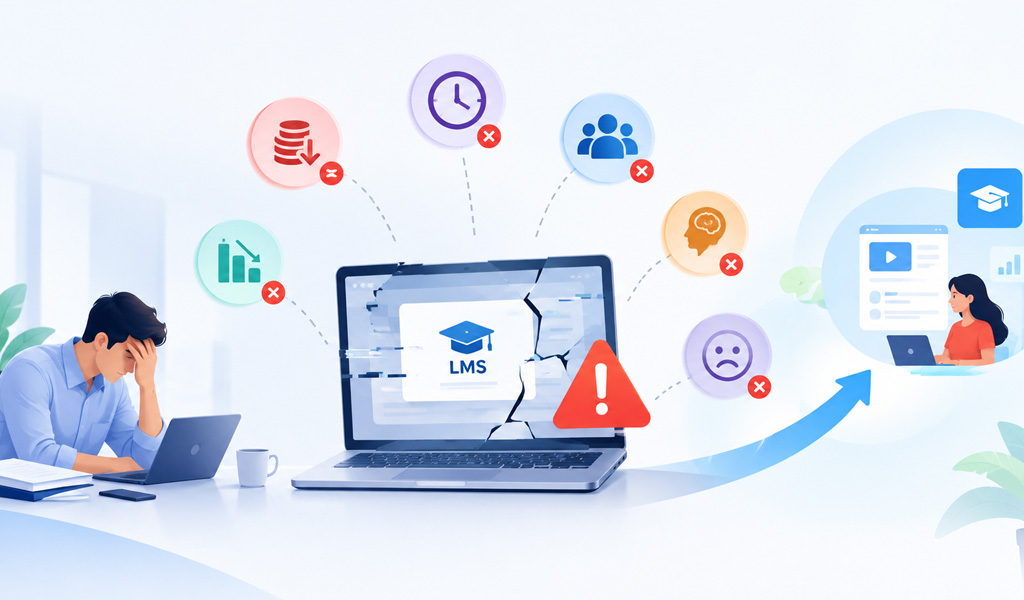
An LMS should do more than deliver courses. It should empower employees, simplify learning, and help organizations turn knowledge into performance. When it fails to do so, the real cost extends far beyond the training budget.
Organizations invest in Learning Management Systems (LMS) to streamline training, improve employee capabilities, and build a workforce that can adapt to changing business demands. Yet, many businesses continue to struggle with low learning engagement, outdated content, limited accessibility, and training programs that fail to translate into workplace performance. The problem is not always a lack of training. Sometimes, it is the learning experience itself. When employees struggle to access relevant information, managers spend hours tracking progress, and training becomes a compliance exercise, organizations lose more than money. They lose productive time, opportunities to develop talent, and the ability to build a consistently capable workforce.
Edurigo Technologies At the focus is on making learning more accessible, engaging, and aligned with organizational needs. Because a learning platform should not simply record what employees have learned. It should help organizations create the conditions for employees to apply that knowledge effectively. Understanding the hidden costs of an ineffective LMS is the first step toward building a smarter learning strategy.
1. Lost Productivity: When Learning Gets in the Way of Work
Employees have deadlines to meet, customers to serve, and responsibilities to manage. Learning should support these priorities, not compete with them. However, a complicated LMS can make even simple activities unnecessarily time-consuming. Employees may struggle to locate courses, navigate confusing interfaces, or access training materials when they need them most. What should take a few minutes can become another frustrating task in an already busy workday. Across a large organization, these small inefficiencies can accumulate into substantial lost time. Employees may also interrupt colleagues for information that should be readily available, while managers spend valuable hours helping teams navigate training resources.
Where Edurigo fits in
Edurigo Technologies focuses on making workplace learning more practical and accessible. Approaches such as mobile learning, microlearning, and structured learning experiences can help organizations deliver relevant knowledge in manageable formats. Instead of expecting employees to step away from their responsibilities for every learning need, organizations can make development a more natural part of the workday.
The business impact: Less friction in accessing learning, more efficient knowledge delivery, and a better opportunity to balance employee development with daily responsibilities.
2. Low Engagement: When Course Completion Becomes the Goal
A completed course does not necessarily mean an employee has learned something valuable. Many organizations measure training success through completion rates. While these metrics help track participation, they do not automatically demonstrate knowledge retention, skill development, or the ability to apply learning at work. When training consists of lengthy presentations, repetitive content, and limited interaction, employees may focus on finishing the course rather than understanding its lessons. Over time, learning becomes an obligation instead of an opportunity.
Where Edurigo fits in
Edurigo Technologies supports a more engaging approach to learning by emphasizing experiences that make knowledge easier to consume and apply. Microlearning can break complex information into focused modules. Gamification can introduce meaningful challenges and progress-based motivation. Interactive learning activities can encourage employees to participate rather than passively consume content. The objective is not to make every course entertaining. It is to make learning relevant enough that employees understand its value.
The business impact: More meaningful participation, stronger opportunities for knowledge retention, and learning experiences that go beyond completion tracking.
3. Slower Onboarding: The Cost of Taking Longer to Become Job-Ready
Hiring the right people is only the beginning. Organizations must also equip them with the knowledge, skills, and confidence required to perform effectively. A poorly organized LMS can complicate this process. New employees may encounter disconnected resources, unclear learning paths, and inconsistent training experiences across departments. Managers then have to fill the gaps through repeated explanations and additional coaching. For customer-facing teams, these delays can be particularly costly. Sales representatives need to understand products, customer needs, competitive positioning, and sales processes before they can contribute confidently. The longer employees take to become proficient, the longer organizations may wait to realize the value of their hiring investments.
Where Edurigo fits in
With structured learning journeys and role-relevant training, Edurigo Technologies can help organizations create a more organized approach to employee development. A well-planned onboarding experience gives new hires a clearer understanding of what they need to learn, which resources to access, and how to progress toward their responsibilities. For sales teams, this approach can extend beyond basic product training to include sales playbooks, conversational practice, objection handling, and ongoing knowledge reinforcement.
The business impact: A clearer onboarding journey, more consistent learning experiences, and better support for developing job-ready employees.
4. Knowledge Gaps That Affect Customer Experience
Every customer interaction reflects, in part, what an employee knows and how effectively they can use that knowledge. Sales representatives must communicate product value accurately. Support teams need reliable answers. Service employees must follow current procedures. When employees cannot access the right information, the consequences can reach customers directly. Outdated training materials, inconsistent communication, and inaccessible knowledge resources can lead to incorrect answers, repeated mistakes, and missed opportunities. For businesses, these are not simply training problems. They are operational challenges that can affect customer confidence and brand credibility.
Where Edurigo fits in
Edurigo Technologies places emphasis on making learning and knowledge delivery more relevant to the needs of the workforce. Through organized learning resources, continuous knowledge updates, and role-specific learning experiences, organizations can better support employees as products, processes, and customer expectations evolve. For sales teams, this is especially important. Product knowledge needs to translate into confident customer conversations, while training should help representatives explain benefits, address objections, and respond to different buying situations.
The business impact: Better access to relevant knowledge, more consistent employee preparation, and stronger support for customer-facing performance.
5. Administrative Overload: When L&D Teams Spend More Time Managing Than Improving Learning
Learning and development teams should spend their time building employee capabilities, evaluating learning effectiveness, and improving training strategies. Yet, an inefficient LMS can leave them managing spreadsheets, sending completion reminders, compiling reports, and resolving recurring administrative issues. As organizations grow, these activities can consume an increasing share of the time available for strategic work. Managers face similar challenges when they cannot easily understand learning progress or identify employees who need additional support.
Where Edurigo fits in
Edurigo Technologies recognizes that effective workplace learning requires more than delivering content. The surrounding processes must also support a manageable and organized learning experience. A well-structured learning environment can help organizations centralize resources, organize learning journeys, and improve visibility into employee development. The broader objective is to reduce unnecessary complexity so learning teams and managers can devote more attention to capability building and performance improvement.
The business impact: More organized learning operations, reduced dependence on repetitive manual processes where automation is available, and greater scope for strategic L&D initiatives.
6. Poor Knowledge Retention: Training That Disappears After Completion
Employees may understand a concept during training but struggle to recall it when they need to use it. This is particularly common when learning is treated as a one-time event. Without opportunities to revisit information, practise skills, or reinforce key concepts, the connection between training and workplace application can weaken. Consider a sales representative who completes product training during onboarding but cannot remember a critical feature when responding to a customer objection several months later. The organization has delivered the training. However, the employee still needs support at the moment of application.
Where Edurigo fits in
Edurigo Technologies promotes a more continuous approach to learning, where development extends beyond the initial training session. Microlearning, refresher modules, scenario-based practice, and accessible learning resources can help employees revisit important concepts and build familiarity over time. For sales teams, AI-powered roleplays and practical conversation exercises can also provide opportunities to practise handling customer objections, conducting discovery conversations, and communicating product value. Rather than relying exclusively on information delivery, organizations can create learning experiences that support practice and application.
The business impact: Better opportunities for knowledge reinforcement, more practical skill development, and stronger connections between learning activities and workplace responsibilities.
7. Disengaged Employees: When Learning Feels Disconnected From Career Growth
Employees are more likely to value learning when they can see how it relates to their roles, performance, and professional development. When an LMS delivers generic content that has little connection to everyday responsibilities, employees may struggle to understand why the training matters. Over time, this disconnect can weaken participation and reduce enthusiasm for future development opportunities. The issue is not necessarily that employees do not want to learn. It may be that the learning experience does not reflect what they actually need.
strong>Where Edurigo fits in
Edurigo Technologies supports the idea that learning should be relevant to the individual and the work they perform. Role-based learning paths and focused development activities can help organizations deliver content that better reflects different responsibilities and capability requirements. When employees can access relevant knowledge, practise useful skills, and identify clear development opportunities, learning becomes more closely connected to their professional growth.
The business impact: More relevant learning experiences, stronger opportunities for employee development, and a workplace culture that places greater emphasis on continuous improvement.
8. Limited Visibility: When Organizations Cannot Connect Learning to Performance
An LMS can generate large amounts of data. The real challenge is understanding what that data means for the business. Course completion reports may show how many employees finished a module, but they do not necessarily reveal whether those employees can apply the information effectively. Without meaningful indicators, organizations may struggle to identify persistent skill gaps, evaluate learning initiatives, or determine where additional support is needed. This makes it difficult to move beyond measuring training activity and toward understanding learning effectiveness.
Where Edurigo fits in
Edurigo Technologies emphasizes the importance of connecting learning initiatives with organizational objectives. Learning data becomes more useful when considered alongside relevant indicators such as assessment performance, demonstrated capabilities, time to proficiency, and role-specific business outcomes. For sales teams, organizations might also examine whether improved product knowledge and coaching are associated with better sales conversations, stronger pipeline progression, or improved conversion rates. These outcomes depend on multiple factors, so training should not be treated as their sole cause. However, combining learning insights with performance measures can help organizations make more informed decisions.
The business impact: Better visibility into development needs, more informed learning decisions, and a clearer framework for evaluating the contribution of training.
9. Limited Agility: When Learning Cannot Keep Up With Business Change
Markets evolve. Products change. Customer expectations shift. Employees need new capabilities to keep pace. When learning systems make it difficult to update content or communicate new information, organizations risk creating a gap between business requirements and employee readiness. Imagine a company launching a new product. Its sales team needs to understand the latest features, pricing, competitive advantages, and customer use cases. If relevant information takes weeks to reach employees, the organization may miss valuable opportunities while its teams catch up.
Where Edurigo fits in
Edurigo Technologies supports a learning approach built around continuous development and timely knowledge delivery. Mobile learning, focused product updates, organized knowledge resources, and targeted learning experiences can help organizations communicate important information in formats employees can access more conveniently. For sales enablement, short product updates and practical conversation exercises can help teams prepare for changing customer needs without relying exclusively on lengthy, occasional training sessions.
The business impact: Better support for continuous learning, more timely knowledge communication, and a stronger foundation for adapting employee capabilities as business needs change.
10. The Biggest Hidden Cost: Learning That Does Not Translate Into Performance
The costs of an ineffective LMS rarely appear independently. Low engagement can weaken knowledge retention. Poor onboarding can increase the demands placed on managers. Inaccessible information can affect customer interactions. Limited reporting can make it difficult to identify and address these challenges. Together, these issues create a fundamental problem: organizations invest in training but struggle to translate that investment into meaningful improvements in employee capability. This is where the conversation needs to change. The value of an LMS should not be judged solely by its subscription price, the number of courses it hosts, or the percentage of employees who complete their training. Organizations should also consider whether the learning experience helps employees perform their roles more effectively.
Edurigo Technologies approaches learning with this broader objective in mind: helping organizations create learning experiences that connect knowledge, practical application, and employee development.
From accessible learning content to continuous development and practical sales enablement, the focus is on making learning more relevant to the challenges employees face at work. Because the ultimate purpose of training is not to generate completion certificates. It is to help people build the capabilities required to do their jobs well.
What Should Organizations Look for in an LMS?
Recognizing the hidden costs is only the beginning. Organizations must also understand what a more effective learning environment should offer. When evaluating an LMS or reviewing an existing platform, consider the following capabilities.
A User-Friendly Learning Experience
Employees should be able to navigate the platform, locate resources, and access training without unnecessary friction.
Mobile Learning and Microlearning
Learning should fit more naturally into the workday through accessible content and focused modules that make information easier to consume.
Structured and Personalized Learning Paths
Employees should have clear development journeys that reflect their roles, existing capabilities, and learning requirements.
Interactive and Practical Learning
Scenario-based activities, assessments, gamification, and roleplays can provide opportunities to practise skills instead of relying exclusively on passive content consumption.
Continuous Knowledge Updates
Organizations need practical ways to keep employees informed when products, processes, policies, or business priorities change.
Actionable Learning Insights
Reporting should help organizations understand participation, identify development needs, and evaluate learning alongside relevant performance indicators.
Support for Business Objectives
Learning initiatives should connect with the capabilities employees need to deliver better work, serve customers, and contribute to organizational goals. For Edurigo Technologies, these principles reflect an important distinction: an LMS should not simply function as a digital repository for training materials. It should form part of a broader strategy for employee development and organizational performance.
How Edurigo Technologies Helps Organizations Rethink Workplace Learning
The challenges associated with a bad LMS highlight a larger opportunity for organizations to reconsider how they approach employee training. Effective learning is not just about uploading content, assigning courses, and tracking completion. It involves understanding what employees need to know, how they can practise relevant skills, and how learning can support their responsibilities.
Edurigo Technologies brings this perspective to workplace learning through solutions and approaches designed to support more accessible, engaging, and practical development experiences.
By combining learning technology with purposeful content and relevant development strategies, organizations can work toward a learning environment that better supports their people. This approach can include:
- Structured learning journeys: Organizing training into clearer pathways that help employees understand what they need to learn and how to progress.
- Microlearning and mobile learning: Making focused learning experiences easier to access within the flow of work.
- Interactive learning experiences: Encouraging active participation through assessments, scenarios, and opportunities to practise.
- Sales enablement: Helping sales teams develop product knowledge, practise customer conversations, work with sales playbooks, and strengthen their readiness for real-world selling situations.
- Continuous learning:Supporting ongoing knowledge reinforcement rather than treating training as a one-time event.
- Performance-focused development: Encouraging organizations to look beyond course completion and consider how learning supports employee capabilities and business objectives.
The right approach will depend on each organization's workforce, existing systems, and priorities. However, the underlying principle remains the same: learning should serve a purpose beyond delivering information. It should help people become more capable, confident, and prepared for the work ahead.